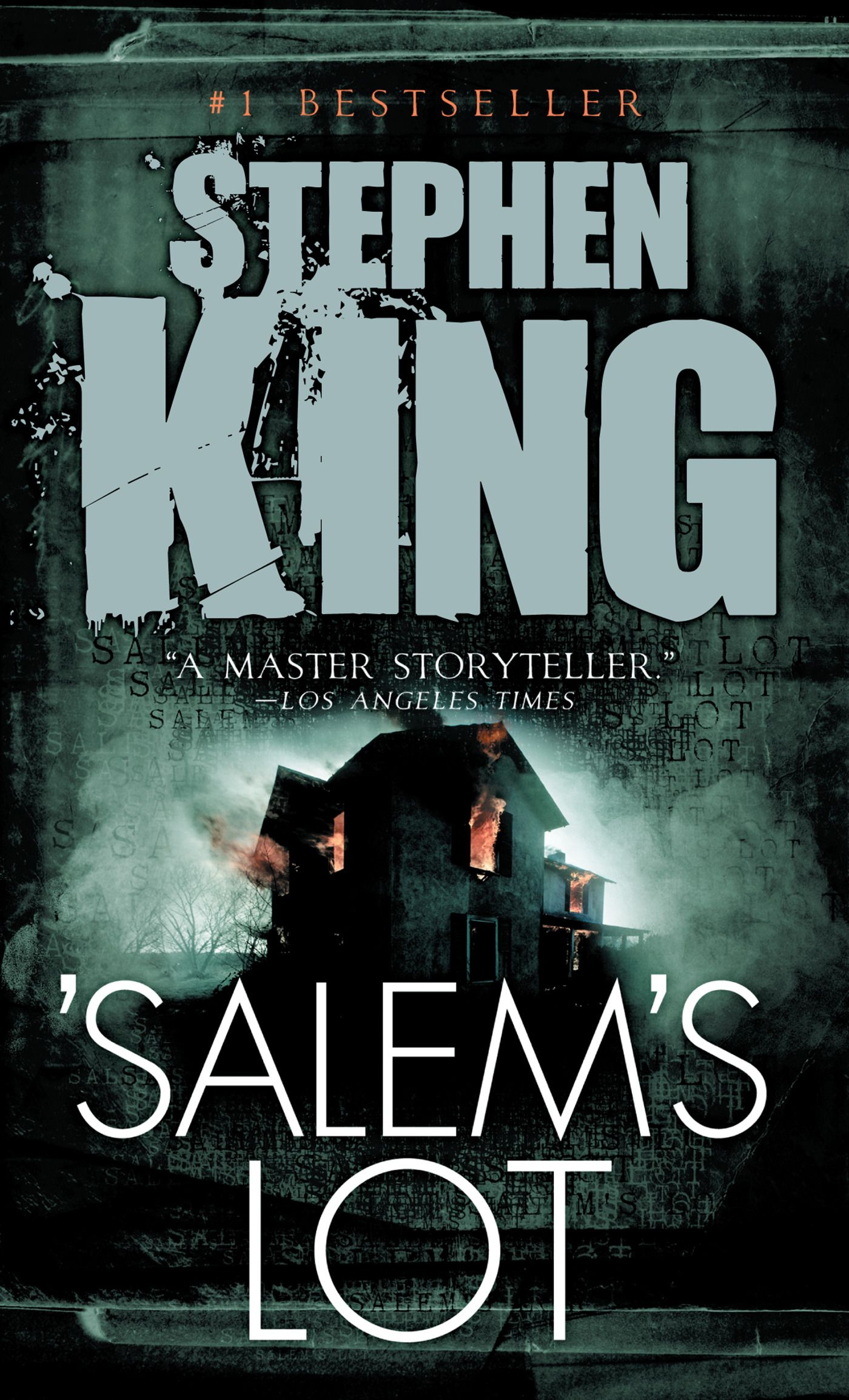
Salem’s Lot by Stephen King is a vampire novel set in a small town slowly dying off. Jerusalem’s Lot feels like a place already on its last legs, which makes it the perfect target for something evil to move in and finish the job.
This is King’s second published novel, and you can feel him pulling directly from Bram Stoker’s Dracula. It very much reads like an ode to that story, with King putting his own small town American spin on it. He had already written Jerusalem’s Lot, a prequel short story that was later published in Night Shift, so this world was something he clearly had been building for a bit.
One of the more interesting aspects is how widespread the infection becomes. This is one of the earliest vampire stories I can think of where it feels like the entire town is at risk of turning. You can see the DNA of later stories like The Strain and 30 Days of Night, where the horror comes from a full-scale takeover rather than a single lurking monster.
Religion plays a big role here, specifically Catholicism versus vampires. The symbolism of light versus darkness is everywhere. These are very traditional vampires. They burn in sunlight, sleep during the day, fear true believers wielding crosses, and can be killed by a stake through the heart. The bite itself is small and subtle, almost unnoticeable, which adds to how quickly the infection spreads through the town.
The pacing is solid, especially for a longer book. The chapters themselves are long, but King breaks them up with numbered sections that make it easy to read in chunks. The final chapter alone takes up about a quarter of the book and moves at a much faster pace than the rest.
The horror here is more atmospheric than outright terrifying. There are moments that absolutely work, especially the famous window scene, but a lot of the confrontations feel a bit too easy. The vampires are often dealt with while they’re asleep, which takes away some of the tension. The main vampire stays in the shadows for most of the story and never quite becomes as compelling as I wanted. Oddly enough, his familiar ended up being more unsettling.
Salem’s Lot was first published on October 17, 1975.

Why did I read Salem’s Lot by Stephen King?
This was a big gap in my Stephen King backlog. I’ve owned a copy for about 20 years and finally got around to reading it.
The main push came from receiving an ARC of Monsters in the Archives by Caroline Bicks. The book explores Stephen King’s drafts and notes, and Salem’s Lot is one of the works it covers, along with Pet Sematary, The Shining, Carrie, and Night Shift. I wanted the full context going in.
Plot Summary:
Writer Ben Mears returns to his hometown of Jerusalem’s Lot to write about a traumatic experience from his childhood, possibly involving the Marsten House, a rundown and ominous home overlooking the town. When he tries to rent it, he discovers it has already been purchased by a mysterious buyer.
Ben settles into a boarding house instead, where he begins to reconnect with the town and forms a relationship with Susan. As people begin to go missing and bodies disappear from the morgue, Ben starts to notice a pattern. Something is wrong in Jerusalem’s Lot, and it doesn’t take long before he realizes the truth: vampires are taking over the town. It’s up to Ben and a small group of townspeople to fight back.
What I Liked:
You can see King starting to build what would later become one of his greatest strengths: making a town feel alive. I loved the small vignettes jumping between different townspeople. It gave the town personality, even if I didn’t connect deeply with any one individual.
Ben Mears was a solid lead. His reason for returning to the town worked, and I liked how he tried to help people who weren’t always welcoming to him.
There are early hints of ideas King would later expand on, like a brief moment with a ghost clown that feels like a precursor to Pennywise in It.
The prologue and epilogue are incredibly well done. They connect in a way that adds context and elevates both scenes. It’s a great framing device that really stuck with me.
The window scene absolutely lived up to the hype. It’s one of the creepiest moments in the book and easily the standout horror sequence.
What I Disliked:
Two characters who were starting to get interesting are written out too early. One worked, but the other felt like a missed opportunity.
The master vampire never fully clicked for me. He stays too distant and underdeveloped, and I wanted a clearer sense of his motives.
The first victim feels important since he is sacrificed rather than turned, but we never really get a satisfying explanation for why that happened.
I wanted a stronger emotional connection to the characters and a more focused central theme.
Recommendation:
Salem’s Lot is a classic for a reason, even if it didn’t fully land for me. You can clearly see its influence on so many vampire and “infected town” stories that came after it.
If you’re a Stephen King fan, it’s definitely worth reading, especially to see the early stages of his writing style and ideas. Readers who enjoy traditional vampire lore and strong atmosphere will likely get more out of it than those looking for nonstop horror.
Rating:
Salem’s Lot by Stephen King
3.5 out of 5
My Stephen King Ranking so far
Leave a Reply