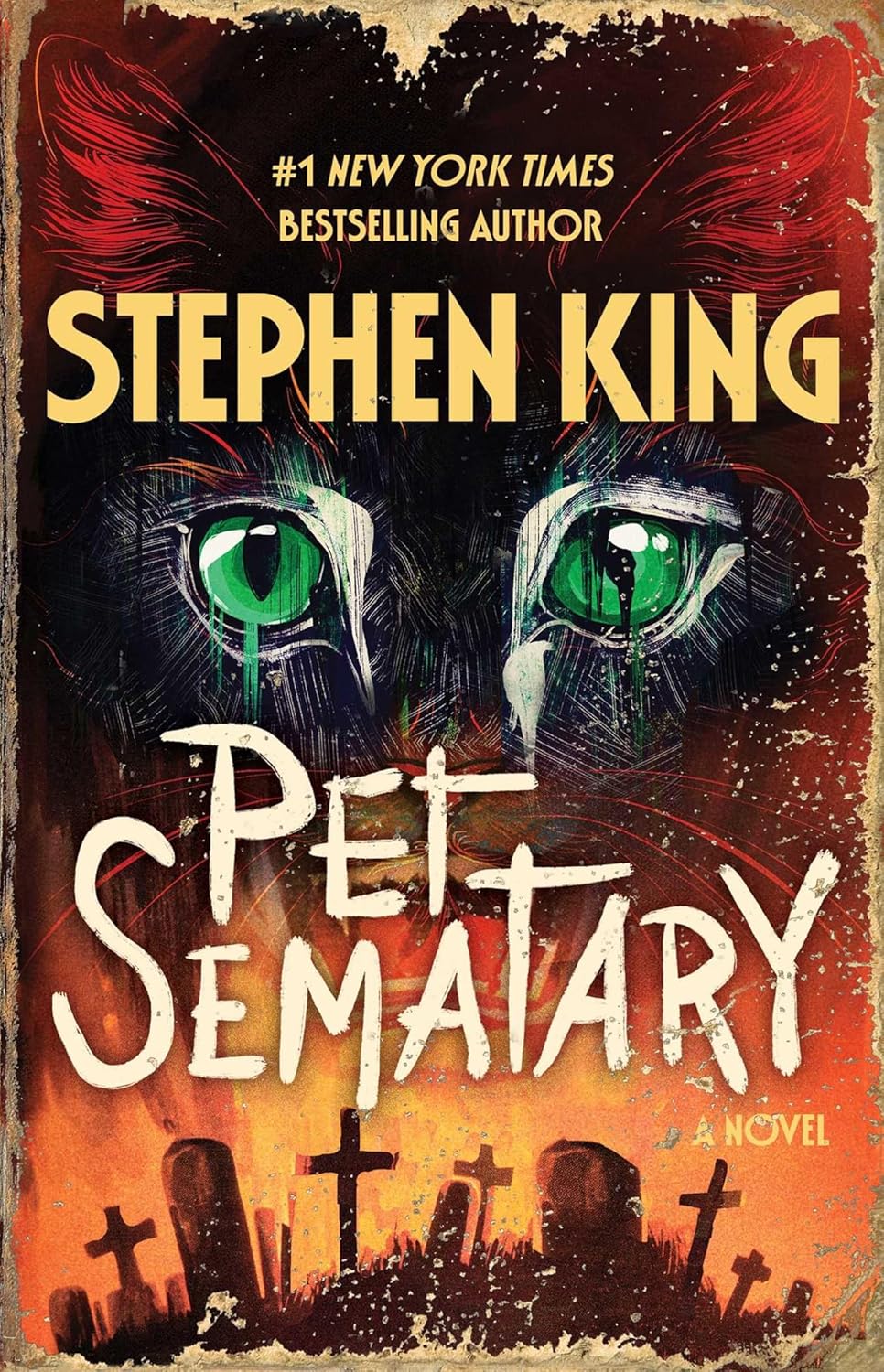
Pet Sematary by Stephen King is a grief horror about bringing loved ones back from the dead. The tone is set early. This book is about family and death. The genius of King’s writing is getting the reader to question what they would do if a loved one died and they had access to something that could bring them back.
The theme of death is present throughout the entire book. Even during the happier moments, death still lingers in the background. It feels as if death itself is knocking on the door. The phrase “sometimes dead is better” is repeated often. It refers to the idea that some people and some things are better left buried.
Jud Crandall might be my favorite Stephen King character. With his deep Maine accent, he serves as both the moral center of the story and the catalyst for the events that follow.
Pet Sematary is widely considered Stephen King’s darkest novel. The ending reflects the heavy subject matter. King originally did not plan to publish the book because he felt it went too far. His publisher was unhappy with Different Seasons, and King still owed them one more book under contract, so he handed over Pet Sematary.
This is also one of King’s better paced novels. There is only one story within a story that Jud tells which rambles a little longer than necessary.
The ending has two parts. The first part works but happens very quickly. The final scene, however, is perfect. None of the movies have captured that moment. It shocked me. Is it a happy ending? Maybe not, but King leaves the answer in the reader’s hands.
I was able to listen to about 40 percent of the book on audio, performed by Michael C. Hall from the television show Dexter. He gives a fantastic performance and does a great job with Jud’s heavy Maine accent. I don’t know if having Dexter narrate made a little extra dark, but it worked.
Possible spoiler observation – I noticed similarities between Gage in Pet Sematary and Beth in Little Women. In both stories the character’s fate is hinted at very early. Both also have scenes involving a kite that work as metaphors.
Pet Sematary was first published on November 14, 1983.

Why did I read Pet Sematary by Stephen King?
Pet Sematary was a big gap in my Stephen King reading. I would eventually like to read his entire bibliography. I’m currently up to 18.
Another reason I read this book is because I received an ARC for Monsters in the Archives by Caroline Bicks. The book examines Stephen King’s work and includes access to his archives that he had never allowed anyone to see before. Bicks looks at early drafts of Carrie, Night Shift, Salem’s Lot, The Shining, and Pet Sematary. The book releases on April 21, 2026.
Plot Summary:
Louis Creed moves his family to Maine after getting a good job at a university clinic. The family loves their new home, especially the large yard that leads into the forest.
Their neighbor Jud Crandall is a kind older man whom Louis immediately connects with. Jud shows the family a small burial ground in the woods, a children’s pet cemetery spelled in crooked letters as Pet Sematary.
Life initially goes well for the family, but Louis soon experiences a traumatic event at work when a dying student is brought to him.
Later, the family cat Church is hit by a Truck while Louis’s family is away. Jud helps him bury the cat in a mysterious place beyond the Pet Sematary. Louis feels as if the experience is dreamlike.
Then Church comes back.
The cat smells like rot and begins killing small animals. Louis eventually asks Jud a dangerous question. If the place can bring back animals, can it bring back something more?
What I Liked:
I loved how the book asks difficult questions about death. Ellie, the young daughter, begins the discussion by asking questions only a child would ask. The story forces both Louis and the reader to consider whether honesty or comfort is the better response.
Church the cat was incredibly creepy. In many ways he was the scariest element in the book.
Jud Crandall is one of King’s best characters. I loved his stories, his philosophy, and his life experience. His Maine accent was also very fun to read and hear performed by Michael C. Hall.
Rachel’s monologue about her sister Zelda is some of King’s best writing. It feels raw and deeply emotional, as if a long buried secret is finally being pulled out.
The final line of the book is perfect. It is both creepy and strangely sweet. King has disappointed me with some endings in the past, but this one absolutely works.
I also liked how the story depicts the descent into madness. At first the reaction to grief is calm and rational. Eventually grief becomes desperation. Desperation then begins to justify terrible decisions.
What I Disliked:
The dream within a dream sequence felt predictable. It might have felt more original when the book was first published, but now it feels like a familiar trope.
Stephen King often includes a character who travels from outside the area of danger and then barely affects the plot. Pet Sematary actually uses this trope better than some of his other books, The Shining and Misery, but I still felt those characters could have done more. Even so, I still give books with this trope five stars.
Jud’s story about Timmy Baterman is the only part where the pacing noticeably slows. The story itself is good, but the long buildup makes it feel slightly dragged out.
Recommendation:
It took me far too long to finally read Pet Sematary. Because so many Stephen King books have movie adaptations, I sometimes think about prioritizing the ones that have not been adapted. But when I read books like The Shining, Misery, and Pet Sematary, I realize how much the movies leave out.
The films capture the skeleton of the story, but the emotional depth and psychological horror are much richer in the book.
This story contains heavy subject matter and disturbing imagery, including the death of loved ones. I recommend it to readers who are comfortable with very dark horror.
Rating:
Pet Sematary by Stephen King
5 out of 5 stars
My Stephen King Ranking so far


Leave a Reply to aquavenatusCancel reply